80%
of enterprises believe in the transformative impact of AI and have invested accordingly.
Web-app built for Desktop/Laptop for now, not optimized for phones/tablets
Part 01 · Framing
Enterprises have spent heavily on AI and seen little operational impact. The gap is not a model problem. It is a governance and context problem.
Most enterprise deployments fail before the AI model is ever the bottleneck. They fail in how context is assembled, how organizational data is structured and prioritized, and how agent access is governed.
This site presents an original perspective: build a governable system custom-tailored to the organization, and let agents work inside it.
Working thesis
The gap is not model capability. It is the governed translation from enterprise intent into executable context for agents.
The paradox
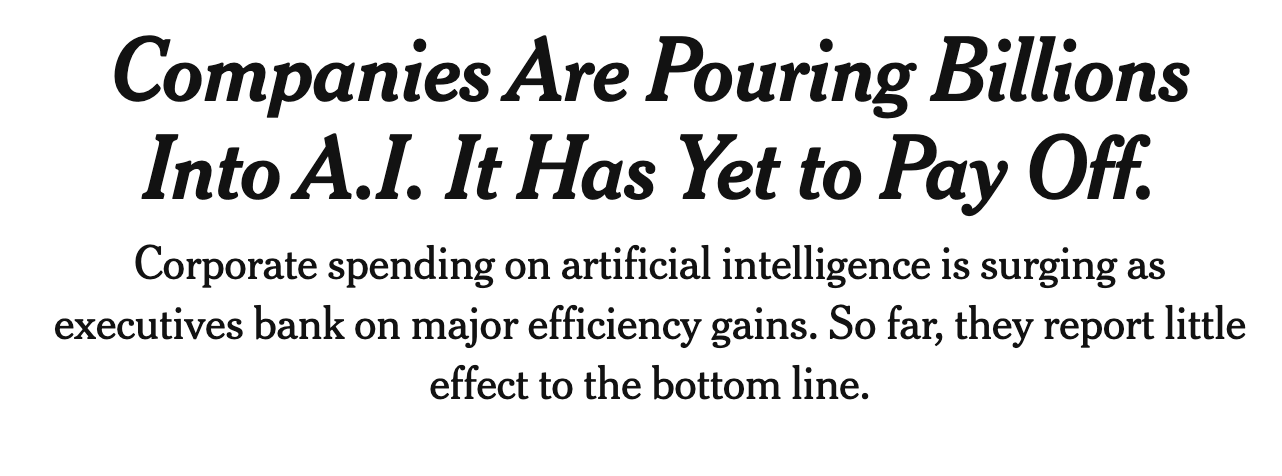
80%
of enterprises believe in the transformative impact of AI and have invested accordingly.
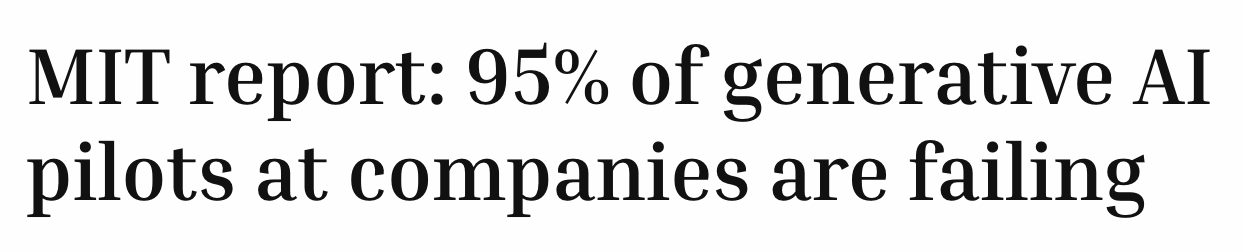
80%
of those same enterprises say they have not yet seen the investment reflected in the bottom line.


Part 02 · Problem & landscape
Context is not just extra information. It is the structure that determines whether an agent can act safely, consistently, efficiently, and credibly inside an organization.
Context handling, done seriously, is responsible for:
CSR ≠ ISR
An agent that follows 9 of 10 constraints gets a perfect Constraint Success Rate — and an Instruction Success Rate of zero.
Context rot
Accuracy drops 68 percent when single-function benchmarks become multi-file, distributed tasks.
Middle loss
LLMs weight information at the start and end of long prompts more than information buried in the middle. AKA the "needle in a haystack" problem.
Landscape
GitHub Spec Kit, Kiro, and adjacent tools prove specs matter. This project extends that idea into governed enterprise context.
Unblocked, Augment, Sourcegraph, Tabnine, and others focus on organizational memory, permissions, and contextual recall.
Hybrid search, graph approaches, long-context strategies, and instructed retrieval all compete to improve evidence quality.
MCP, A2A, and orchestration frameworks shift the question from pure search to controlled access and execution flow.
Unblocked
Organizational context and authority-aware signals.
Augment Code
Semantic dependency analysis across 400K+ files, SOC 2 Type II.
Qodo Context Engine
Deep research agent; high DeepCodeBench accuracy.
Context Hub (Ng)
Open-source CLI; agents annotate and "remember" workarounds.
Kayba ACE
Self-improving via reflection; evolving "Skillbook" as system prompt.
Microsoft Agent Skills
126 modular knowledge packages for Azure / Foundry.
Tabnine ECE
Privacy-first; on-prem or air-gapped deployments.
Greptile
Graph-first semantic code graph; cross-service propagation detection.
Sourcegraph Amp
Most established; enterprise knowledge graph; SOC 2 + ISO 27001.
Hyland ECE
Broad content/process/people linking across ERP, CRM, EHR.
Faros Clara
Enhanced AGENTS.md built from years of coding assistant usage.
Graphiti (Zep)
Temporal knowledge graphs; time-aware fact management.
Where this work sits
This work is not another context engine. It is the governance layer that sits above the retrieval layer — the part that decides what the agent is allowed to see, under whose authority, and with what audit obligation. It is customizable to fit an organization’s structure, governance needs, and intended agentic use cases.
Some of the approaches to better context
Common pattern
Data structure approach
Context management approach
This project
Part 03 · Introduction
Platform AI solutions often treat enterprises as interchangeable. Real enterprise data is not. Security models, authority hierarchies, internal systems, and compliance obligations are specific to the organization, and generic context engines or orchestration layers tend to flatten differences that actually matter.
My argument
A hand-built orchestration layer is not architecture for its own sake. It is the only path that forces the enterprise to confront security, reliability, and governance — rather than inheriting someone else’s answers.
Part 04 · Approach
The system is designed so that stakeholders, engineers, and domain owners each contribute to how agents are governed, deployed, and evaluated.
My approach has three load-bearing pieces:
The spec-driven development document stack
GitHub Spec Kit centers the spec. Kiro centers the workflow. This model centers the governed translation from enterprise intent into agent-usable context.
School I
Centers the · Spec
4-phase CLI, 14+ agents, MIT-licensed. Greenfield, single-repo, agent-agnostic. The spec is the artifact.
School II
Centers the · Workflow
Code-OSS IDE; EARS notation; Requirements → Design → Tasks. AWS-native, formal documentation stack.
School III
Centers the · Governed translation
Specs translate stakeholder intent into scoped, authority-aware agent context. Retrieval and orchestration are first-class citizens of the spec stack, not afterthoughts.
The retrieval process
The Supervisor is my programmatic solution for an orchestration layer — governable AI agent guidance. It does not replace the agents’ reasoning — it governs the workflow around them, deciding what must be known, what happens next, and when the system should pause, escalate, or continue.
A context bundle is the package of information an agent receives before it does its work. Instead of giving the agent unrestricted access to everything, the system assembles a scoped set of instructions, documents, rules, and relevant evidence so the agent can reason within the right boundaries.
The orchestration layer
Center the translation layer
GitHub Spec Kit centers the spec. Kiro centers the workflow. This model centers the governed translation from enterprise intent into agent-usable context.
Keep orchestration deterministic
The supervisor is a deterministic state machine that owns step order, gate logic, and state mutations so failures remain visible, inspectable, and governable.
Make retrieval source-aware
Enterprise context is not one undifferentiated knowledge blob. Retrieval should preserve source boundaries, authority, permissions, and freshness instead of collapsing everything into a single opaque index.
Evaluate behavior, not fluency
What matters is whether agents escalate correctly, stay within scope, and ground their outputs in traceable evidence.
Let domain agents reason within constraints
The LLM is allowed to reason freely inside its assigned domain, but only within a scoped context bundle and a controlled orchestration environment. Flexibility lives inside the guardrails, not outside them.
Bird’s-eye view of my spec-driven approach to enterprise context engineering
Part 05 · Business scenario
Putting the architecture to work on a realistic scenario.
Lichen Manufacturing is evaluating OptiChain, a demand-forecasting platform, with a 30-day contract window for a go/no-go decision. Their current vendor-onboarding process is ad hoc and takes 3–5 weeks — the window can’t reliably be met. And a recent internal audit flagged two vendors that had been granted system access before security review completed. That can’t happen again.
What makes vendor onboarding difficult?
Teams must cross-reference policies, matrices, prior guidance, and intake materials just to determine the correct review path.
Policies, matrices, intake materials, and discussion threads do not always point in the same direction, so teams have to resolve contradictions before onboarding can move forward.
Security, legal, and procurement often re-check overlapping material in parallel, creating redundant work and inconsistent summaries instead of one governed process.
Security, legal, or compliance obligations are often discovered after work has already started, creating rework and delay.
When evidence is incomplete or conflicting, work stalls and prior assumptions must be revisited instead of quietly pushed forward.
Business owners often cannot tell why onboarding is blocked, what is missing, or which stakeholder needs to act next.
1 of 6
Who are the stakeholders?
Owns policy enforcement and technical risk.
Determines risk posture, integration sensitivity, and whether the request can qualify for streamlined review.
Governing documents
Owns contractual and regulatory posture.
Determines legal triggers such as DPA requirements and reviews unresolved compliance obligations.
Governing documents
Owns the vendor relationship and commercial routing.
Controls intake, approval path determination, and the overall business process around onboarding.
Governing documents
Shared across stakeholders
What a vendor onboarding process looks like
Vendor questionnaire submission
Procurement
Data classification — regulated or not
IT Security, evaluated against IT Security policy
ERP integration scope
From questionnaire — IT Security evaluates
NDA status
From questionnaire — Legal verifies against IT Security policy
EU personal data handling
From questionnaire — Legal evaluates
DPA requirement
Legal, against DPA contract
Fast-track eligibility
IT Security — regulated data disqualifies
Approval path determination
Procurement — needs IT Security + Legal outputs first
Executive approval threshold
Procurement — based on deal size and vendor class
What this agentic workflow does
I
Act I
Until OptiChain submits a complete vendor questionnaire, no review can begin. The pipeline halts, flags the gap, and asks Procurement to chase the submission.
R-01 · Vendor questionnaire intake
II
Act II
The system first determines whether the request belongs on a regulated or streamlined path. If the vendor touches ERP-connected, sensitive, or regulated data, the workflow moves into a stricter review posture before anything else continues.
R-02 · Onboarding path classification
III
Act III
Once the path is known, the workflow identifies what legal or compliance obligations are actually in play. That includes questions like whether a DPA is required and whether contractual review must block progress before implementation can move forward.
R-03 · Legal and compliance trigger determination
IV
Act IV
The system then determines whether the vendor can move through an expedited approval path or must stay on the standard route. If the request involves regulated data or even borderline risk, the workflow defaults to the standard path and records why.
R-04 · Fast-track eligibility
V
Act V
The workflow does not stop at an assessment. It must produce a structured checklist showing every required sign-off, the responsible stakeholder, blockers that remain open, and the expected timeline before implementation can begin.
R-05 · Complete approval checklist generation
VI
Act VI
The final handoff must tell each team what they own, why their review is required, and what must happen next. The goal is to return something people can act on immediately, without forcing the business owner to interpret policies and approval rules on their own.
R-06 · Stakeholder guidance and handoff support
The document stack for my mock business scenario
Product Requirements Document
Stakeholder intent — used by business stakeholders; defines what the system should do, why it exists, and who it is for.
System architecture — used by engineers; defines how the system is designed and what technical shape it takes.
Context governance — used to build the retrieval/governance layer; defines source authority, retrieval rules, and agent visibility boundaries.
Runtime workflow — used to build the orchestration system; defines execution order, gates, state changes, and escalation flow.
Agent behavior — used by the agents; defines DOs, DON’Ts, scope boundaries, and output contracts.
See domain agent specs in next section
Domain agents in the pipeline
Interprets policy, integration posture, and evidence sufficiency. Security is where policy precedence becomes operational.
Maps vendor facts to legal triggers such as DPA requirements, NDA gating, and contract execution ownership.
Owns approval routing, commercial posture, and the difference between standard and exceptional purchase paths.
Packages domain outputs without swallowing uncertainty. Escalated upstream items stay escalated here.
Emits the stakeholder-ready package: blockers, resolved items, owners, citations, and next actions.